Climate The Movie
Climate: The Movie (The Cold Truth) is a new documentary by the British filmmaker Martin Durkin, who previously in 2007 made The Great Global Warming Swindle. Producer of the new film is climate podcaster Tom Nelson. The Clintel Foundation organised the Dutch premiere of the movie on March 14 in the Figi Theatre in Zeist, The Netherlands. The theatre was fully packed with 570 visitors.
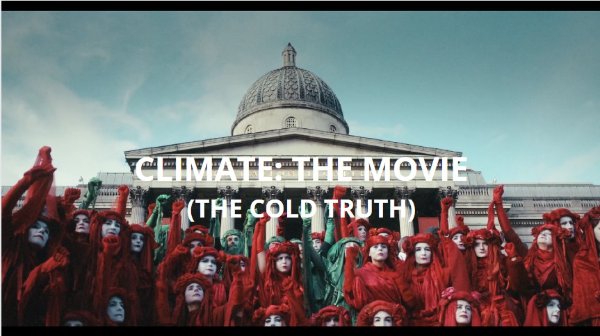
Clintel was not involved in the production of the movie, but helps with the distribution by providing subtitles in many different languages. So far (June 2025) we have: Brazilian Portuguese, Chinese (simplified and traditional), Czech, Danish, Dutch, Estonian, French, Finnish, German, Greek, Hebrew, Hindi, Hungarian, Indonesian, Italian, Japanese, Korean, Norwegian, Polish, Portuguese, Russian, Serbian, Slovenian, Spanish, Spanish (Latin America), Swedish, Turkish and Vietnamese. If you want to help making a subtitle in your language, please contact Evert Doornhof, evert.doornhof@clintel.org. There are also versions with a French, German and Spanish voice over available.
The film can be watched on the Youtube channel of Clintel.
Introduction of the movie by Tom Nelson
This film exposes the climate alarm as an invented scare without any basis in science. It shows that mainstream studies and official data do not support the claim that we are witnessing an increase in extreme weather events – hurricanes, droughts, heatwaves, wildfires and all the rest. It emphatically counters the claim that current temperatures and levels of atmospheric CO2 are unusually and worryingly high. On the contrary, compared to the last half billion years of earth’s history, both current temperatures and CO2 levels are extremely and unusually low. We are currently in an ice age. It also shows that there is no evidence that changing levels of CO2 (it has changed many times) has ever ‘driven’ climate change in the past.
Why then, are we told, again and again, that ‘catastrophic man-made climate-change’ is an irrefutable fact? Why are we told that there is no evidence that contradicts it? Why are we told that anyone who questions ‘climate chaos’ is a ‘flat-earther’ and a ‘science-denier’?
The film explores the nature of the consensus behind climate change. It describes the origins of the climate funding bandwagon, and the rise of the trillion-dollar climate industry. It describes the hundreds of thousands of jobs that depend on the climate crisis. It explains the enormous pressure on scientists and others not to question the climate alarm: the withdrawal of funds, rejection by science journals, social ostracism.
But the climate alarm is much more than a funding and jobs bandwagon. The film explores the politics of climate. From the beginning, the climate scare was political. The culprit was free-market industrial capitalism. The solution was higher taxes and more regulation. From the start, the climate alarm appealed to, and has been adopted and promoted by, those groups who favour bigger government.
This is the unspoken political divide behind the climate alarm. The climate scare appeals especially to all those in the sprawling publicly-funded establishment. This includes the largely publicly-funded Western intelligentsia, for whom climate has become a moral cause. In these circles, to criticise or question the climate alarm has become is a breach of social etiquette.
The film includes interviews with a number of very prominent scientists, including Professor Steven Koonin (author of ‘Unsettled’, a former provost and vice-president of Caltech), Professor Dick Lindzen (formerly professor of meteorology at Harvard and MIT), Professor Will Happer (professor of physics at Princeton), Dr John Clauser (winner of the Nobel prize in Physics in 2022), Professor Nir Shaviv (Racah Institute of Physics), professor Ross McKitrick (University of Guelph), Willie Soon and several others.
The film was written and directed by the British filmmaker Martin Durkin and is the sequel of his excellent 2007 documentary The Great Global Warming Swindle. Tom Nelson, a podcaster who has been deeply examining climate debate issues for the better part of two decades, was the producer of the film. #ClimateTheMovie will be available for free at many online locations starting on March 21 2024. Subtitles for numerous languages are currently being created by the Clintel Foundation. Follow @ClimateTheMovie and @ClintelOrg for updates.
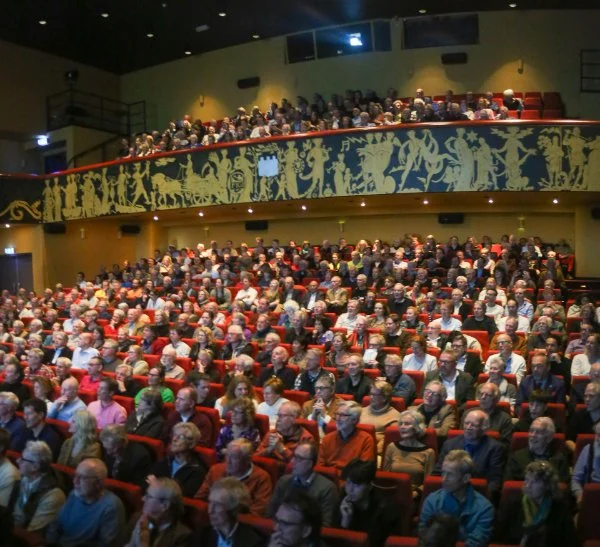
Picture taken during the Dutch premiere on March 14 2024 in Zeist, The Netherlands. Photo by Roy Manuhutu
more news
La pseudoscience derrière l’attribution des phénomènes météorologiques extrêmes
Les études d'attribution des phénomènes météorologiques extrêmes prétendent déterminer dans quelle mesure le changement climatique d'origine humaine influence des événements individuels tels que les ouragans, les inondations et les vagues de chaleur. Dans cet article, Ralph B. Alexander examine les méthodes scientifiques sous-jacentes à ces études et s'interroge sur la fiabilité des preuves étayant leurs conclusions.

La Grande Barrière de corail échappe une nouvelle fois à la liste du patrimoine mondial « en péril » de l’UNESCO
UNESCO has once again decided not to place the Great Barrier Reef on its "In Danger" World Heritage List. Yet much of the international coverage continues to focus on climate warnings rather than on the broader picture of coral recovery. In this opinion article, Australian commentator Jo Nova argues that political narratives increasingly overshadow the underlying monitoring data. Drawing on Peter Ridd's analysis of Australian Institute of Marine Science (AIMS) data, she contends that the Great Barrier Reef remains in far better condition than is commonly portrayed.
La crise en Europe, c’est la pénurie d’énergie, pas une canicule
As Europe experiences another summer heat wave, climate change is once again blamed for extreme temperatures. In this article, Vijay Jayaraj argues that the real crisis is not the heat itself, but energy poverty caused by misguided climate policies. He explains how a natural Omega Block weather pattern drove the recent heat wave and why affordable, reliable energy remains the most effective protection against extreme weather.